“
Find a problem big enough that people want to become your customers now, NOT later.
”Master this box and the right buyer stops saying “neat idea” and starts saying “that’s exactly me — when can I buy?”
Work top to bottom:Start→Do the work→You’re ready
START HERE
You’ve built a vitamin, not a painkiller.
People say “interesting,” “neat,” “cool idea” — never “that’s exactly me, when can I buy?” That’s not a pitch problem. It’s a problem problem, and “later” usually turns into never.
→ Be honest: are you selling a painkiller, or a vitamin?
DO THE WORK
Play Problem Bingo™.
Score your problem against the six marks of a problem worth solving:
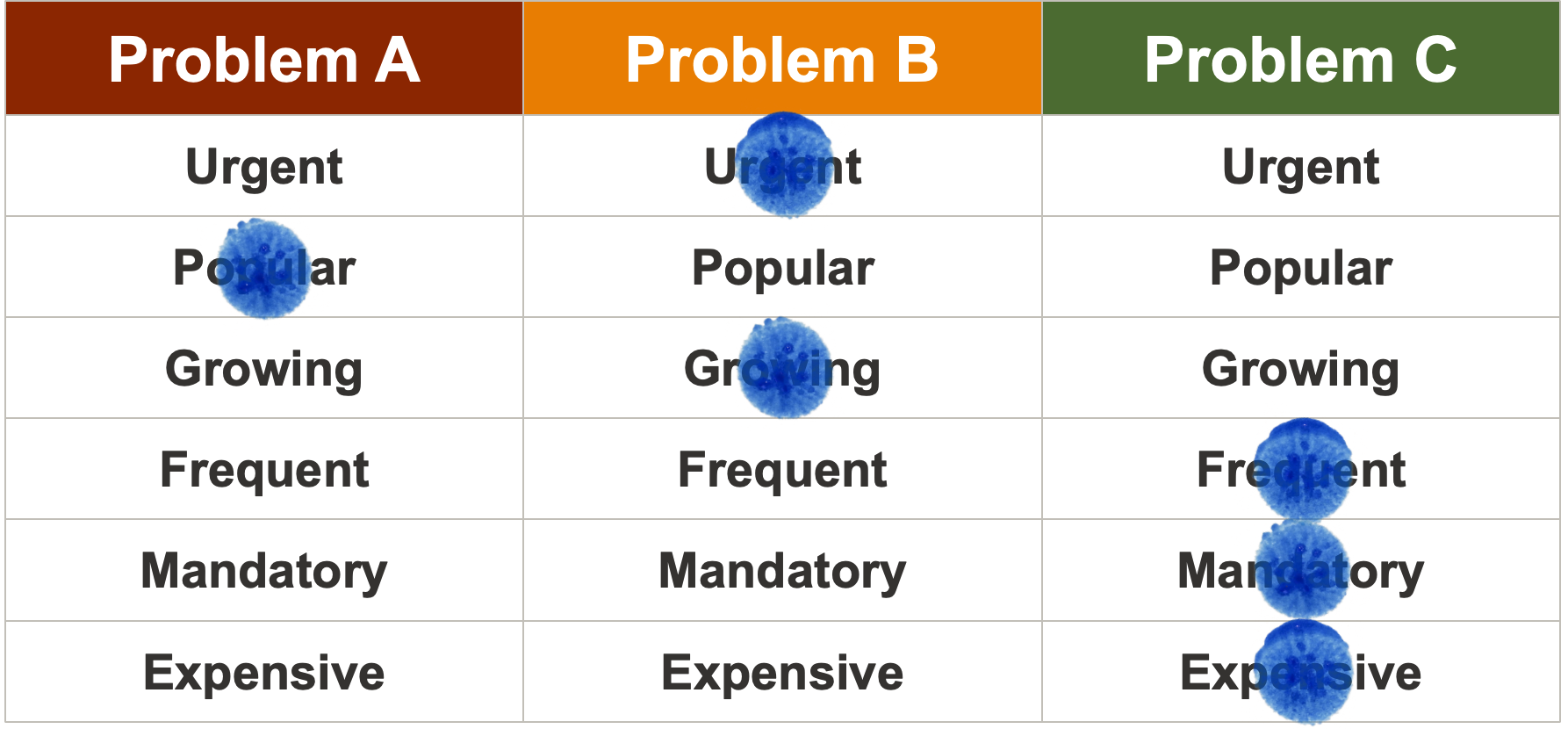
1–2 = vitamin3 or more = painkiller
Then prove it in one sentence so specific the right buyer says “that’s me” — the Seven-Part Problem Statement names who has the problem, what it costs them, and why everything they’ve tried falls short.
“Buyers won’t spend $50 to solve a $100 problem. They WILL spend $50 to solve a $500 problem.”
YOU’RE READY
You can state the problem in one sentence — with a dollar cost attached.
When the right buyer hears it and says “that’s me,” you’ve mastered Box 1. Move on to Bifurcation.
THE THREE BIGGEST MISTAKES
SKIP
Guess the problem instead of testing candidates — you build on a foundation that isn’t there.
SHORTCUT
Name a problem but never attach a dollar cost — false urgency instead of proven pain.
STUMBLE
You describe the problem in your own words instead of the words your customer actually uses — so it never lands as “that’s exactly me.”